Introduction
Omega-3 fatty acids are among the most studied nutrients for cardiovascular protection. These essential fats, primarily found in fish and certain plant sources, play a critical role in reducing inflammation, improving blood vessel elasticity, and stabilizing blood pressure. Understanding how omega-3s interact with the cardiovascular system can help you make smarter dietary choices for long-term heart health.
How Omega-3s Affect Blood Pressure
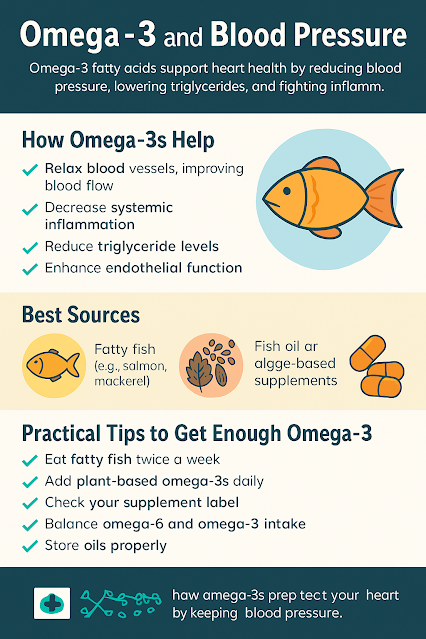
Omega-3 fatty acids—especially EPA (eicosapentaenoic acid) and DHA (docosahexaenoic acid)—influence blood pressure in several ways:
-
They relax blood vessel walls, allowing smoother blood flow and reducing vascular resistance.
-
They reduce triglyceride levels, which supports arterial health.
-
They decrease systemic inflammation by lowering pro-inflammatory cytokines such as IL-6 and TNF-α.
-
They improve endothelial function, enhancing nitric oxide production that widens arteries.
Clinical studies show that regular omega-3 intake can lower systolic blood pressure by 2–5 mmHg on average, especially in individuals with hypertension.
Best Dietary Sources of Omega-3
-
Fatty fish: Salmon, mackerel, sardines, and trout
-
Plant sources: Flaxseeds, chia seeds, walnuts, and canola oil
-
Supplements: Fish oil or algae-based omega-3 capsules for those with limited seafood intake
Choosing whole-food sources is ideal because they contain additional nutrients like vitamin D and selenium, which support heart and immune health.

✅ Practical Tips to Get Enough Omega-3
✅ 1. Eat fatty fish twice a week
Incorporate salmon, tuna, or mackerel into your diet regularly for optimal EPA and DHA intake.
✅ 2. Add plant-based omega-3s daily
Sprinkle chia or flaxseeds on yogurt or salads to boost ALA (alpha-linolenic acid) intake.
✅ 3. Check your supplement label
Look for products that provide at least 1,000 mg of combined EPA and DHA per serving.
✅ 4. Balance omega-6 and omega-3 intake
Reduce processed vegetable oils to maintain a healthy fatty-acid ratio.
✅ 5. Store oils properly
Omega-3s oxidize easily—keep oils in dark bottles and avoid excessive heat.
Why It Matters
Omega-3s are not just another dietary trend—they are fundamental to cardiovascular regulation.
Regular intake reduces inflammation, lowers triglycerides, stabilizes blood pressure, and enhances vascular function.
For individuals with hypertension or at risk of heart disease, adding omega-3s is one of the simplest, most evidence-based lifestyle changes for better outcomes.
Conclusion
Healthy fats, particularly omega-3s, protect your heart by keeping blood pressure in check and improving arterial health.
In a world where processed, omega-6-rich foods dominate, restoring balance through omega-3s is key to long-term heart wellness.
👉Key takeaway: “Feed your heart the right fats—omega-3s can lower pressure, inflammation, and risk.”
References
- American Heart Association – Omega-3 Fatty Acids and Heart Health
- Harvard T.H. Chan School of Public Health – Omega-3 Fats: An Essential Contribution to Health
- National Institutes of Health (ODS) – Omega-3 Fatty Acids Fact Sheet for Consumers