Introduction
Yoga, once viewed mainly as a spiritual practice, is now backed by modern science for its measurable effects on blood pressure and cardiovascular health.
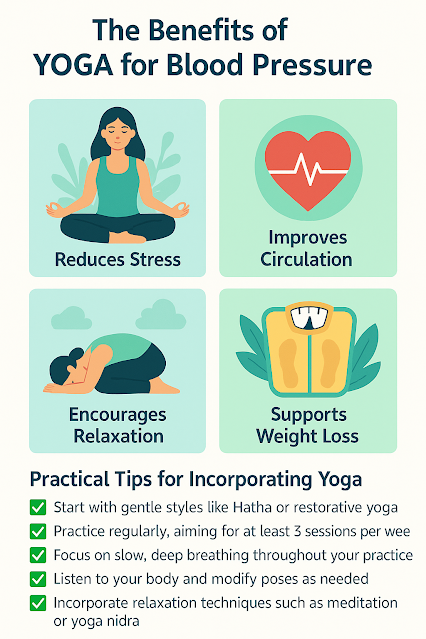
Through a combination of breathing, movement, and mindfulness, yoga helps lower stress hormones and improve circulation — key factors in preventing hypertension.
The Science Behind Yoga and Blood Pressure
Regular yoga practice activates the parasympathetic nervous system, promoting calm and reducing the “fight-or-flight” stress response that drives hypertension.
Studies show yoga lowers systolic blood pressure by 5–10 mmHg, similar to the effects of moderate exercise or first-line medications in mild hypertension cases.
Key Health Benefits
1. Lowers Stress Hormones
Yoga reduces cortisol and adrenaline levels, helping stabilize blood pressure.
2. Improves Vascular Function
Deep breathing increases nitric oxide, which relaxes arteries and enhances blood flow.
3. Enhances Heart Rate Variability (HRV)
A higher HRV reflects better stress resilience and cardiovascular health.
4. Supports Weight and Metabolic Health
Regular yoga improves insulin sensitivity and reduces abdominal fat — both risk factors for hypertension.
5. Promotes Better Sleep
Mindfulness and deep relaxation restore circadian balance and lower nighttime blood pressure.

Practical Tips for Incorporating Yoga
✅ Start Small — Begin with 10–15 minutes of gentle poses daily.
✅ Focus on Breathing — Try slow, diaphragmatic breathing or alternate nostril breathing (Nadi Shodhana).
✅ Choose Restorative Poses — Poses like Child’s Pose or Legs-up-the-Wall are especially calming.
✅ Stay Consistent — Even 3 sessions per week can lower blood pressure within 8 weeks.
✅ Avoid Overexertion — Yoga should feel calming, not competitive.
Conclusion
Yoga is more than flexibility — it’s a scientifically proven tool for heart and vascular health.
By integrating mindful movement and breathwork, you can lower blood pressure, reduce stress, and build a foundation for long-term cardiovascular wellness.
👉 Key takeaway:
“Calm your mind, relax your body, and your blood pressure will follow.”
References
- American Heart Association – Yoga may help lower blood pressure
- Harvard Health Publishing – Yoga for high blood pressure
- National Center for Complementary and Integrative Health (NCCIH) – Yoga: What You Need to Know