Introduction
Hypertension is often thought of as a disease of diet and lifestyle, but mounting evidence shows that when you work can be just as important as what you eat. Shift work, particularly night shifts, disrupts the circadian rhythm — the body’s internal clock — and significantly raises the risk of high blood pressure and cardiovascular disease.
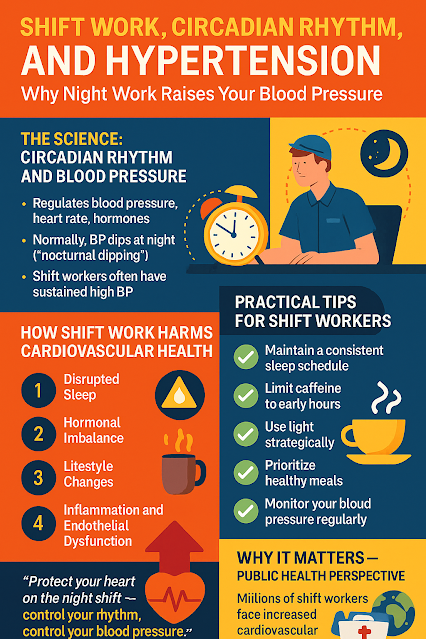
The Science: Circadian Rhythm and Blood Pressure
-
The circadian rhythm regulates blood pressure, heart rate, and hormone release.
-
Normally, blood pressure dips at night (called “nocturnal dipping”).
-
In shift workers, this dipping pattern is often lost, leading to sustained high blood pressure.
How Shift Work Harms Cardiovascular Health
1. Disrupted Sleep
Night workers often have shorter, fragmented sleep, increasing stress hormones.
2. Hormonal Imbalance
Melatonin, cortisol, and other hormones that regulate blood pressure are thrown off schedule.
3. Lifestyle Changes
Shift work is associated with irregular meals, more caffeine, and higher smoking rates — all raising hypertension risk.
4. Inflammation and Endothelial Dysfunction
Chronic circadian disruption increases inflammation and damages blood vessels.
Research Evidence
-
The World Health Organization (WHO) and its IARC division have classified night shift work as a probable carcinogen and a risk factor for metabolic and cardiovascular disease.
-
A meta-analysis in the Journal of Hypertension found that shift workers were 30% more likely to develop hypertension compared to day workers.
-
Studies also show higher rates of non-dipping blood pressure patterns in nurses and factory workers on rotating shifts.
Practical Tips for Shift Workers
✅ Maintain a Consistent Sleep Schedule
Even on days off, try to sleep at similar times to stabilize your rhythm.
✅ Limit Caffeine to Early Hours
Avoid stimulants in the second half of your shift.
✅ Use Light Strategically
Bright light during shifts and blackout curtains at home help reset circadian signals.
✅ Prioritize Healthy Meals
Plan balanced meals instead of relying on vending machine snacks or fast food.
✅ Monitor Your Blood Pressure Regularly
Home monitoring is crucial for early detection of hypertension.

Why It Matters – Public Health Perspective
With millions of healthcare workers, drivers, and service staff working shifts worldwide, the cardiovascular burden of disrupted circadian rhythms is immense. Public health initiatives such as providing healthier cafeteria food, nap rooms, and routine screenings can reduce this hidden risk.
Conclusion
Shift work keeps societies running, but it comes with a hidden health cost. Disrupted circadian rhythms raise blood pressure, damage blood vessels, and increase cardiovascular risk. Recognizing this connection empowers both workers and employers to take preventive action.
👉 Key takeaway:
“Protect your heart on the night shift — control your rhythm, control your blood pressure.”
Related Articles
References
- IARC/WHO – Night Shift Work and Health Risks
- Journal of Hypertension – Shift Work and Hypertension: A Meta-analysis
- National Sleep Foundation – Shift Work Disorder and Health