Introduction
Climate change is not only an environmental crisis but also a health crisis. Rising global temperatures, worsening air pollution, and extreme weather events are creating new cardiovascular risks. Among these, hypertension stands out as a major concern.
The Science: How Climate Change Affects Blood Pressure
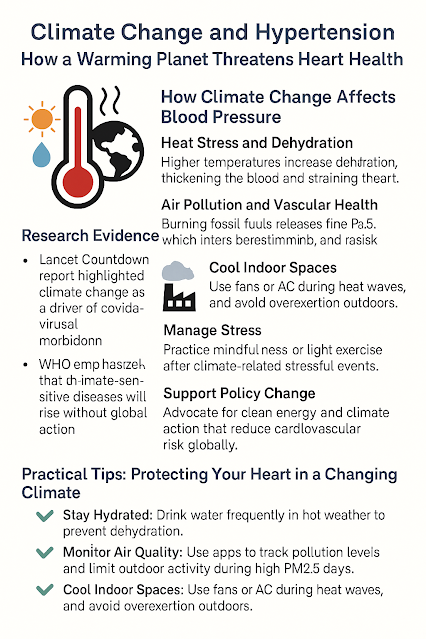
Heat Stress and Dehydration
Higher temperatures increase the risk of dehydration, thickening the blood and straining the heart. Studies show a direct link between heat waves and spikes in hypertension-related hospital visits.
Air Pollution and Vascular Health
Burning fossil fuels releases fine particulate matter (PM2.5), which enters the bloodstream, damages vessel lining, and raises blood pressure.
Psychological Stress from Disasters
Floods, droughts, and wildfires displace communities, leading to chronic stress — a well-known trigger for hypertension.
Research Evidence
-
A 2021 Lancet Countdown report highlighted climate change as a driver of cardiovascular morbidity worldwide.
-
A study in Hypertension journal found that long-term exposure to PM2.5 was strongly associated with increased risk of high blood pressure.
-
WHO emphasizes that climate-sensitive diseases, including hypertension, will rise without global action.
Practical Tips: Protecting Your Heart in a Changing Climate
✅ 1. Stay Hydrated: Drink water frequently in hot weather to prevent dehydration.
✅ 2. Monitor Air Quality: Use apps to track pollution levels and limit outdoor activity during high PM2.5 days.
✅ 3. Cool Indoor Spaces: Use fans or AC during heat waves, and avoid overexertion outdoors.
✅ 4. Manage Stress: Practice mindfulness or light exercise after climate-related stressful events.
✅ 5. Support Policy Change: Advocate for clean energy and climate action that reduce cardiovascular risk globally.

Why It Matters
Climate change and hypertension are deeply connected. Protecting cardiovascular health requires not only individual lifestyle changes but also systemic global efforts. Recognizing these links helps individuals and policymakers act before the crisis worsens.
👉 Key takeaway: “Protecting the planet is protecting your heart.”
Related Articles
References
- World Health Organization –
Climate change and health - American Heart Association –
Hypertension Journal
- NIH/PMC –
Air pollution and hypertension