The Science: Why Blood Pressure Rises in Cold Weather
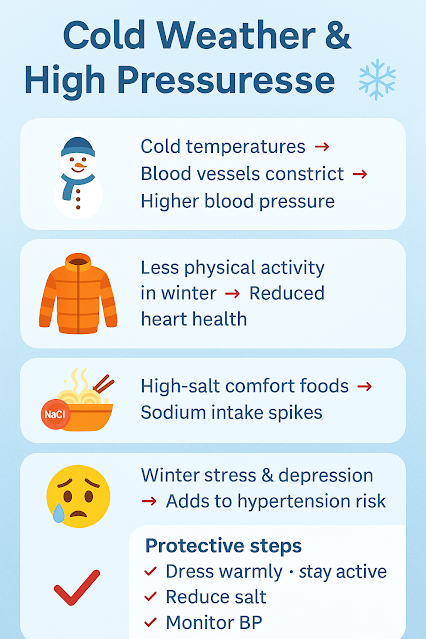
When temperatures drop, blood vessels constrict to preserve body heat. This narrowing increases vascular resistance, causing blood pressure to rise. Studies show that systolic blood pressure can be 5–10 mmHg higher in winter than in summer. People with hypertension or cardiovascular disease face a greater risk during this seasonal shift.
Research Evidence
-
A cohort study in Journal of Hypertension reported that cold exposure significantly raised blood pressure in older adults.
-
The American Heart Association notes that winter months are associated with higher rates of heart attacks and strokes.
-
Indoor heating may partly offset these effects, but sudden exposure to outdoor cold remains a risk.
Lifestyle Contexts
-
Outdoor Activity: Winter exercise like brisk walking or skiing is beneficial, but sudden exertion in cold can strain the heart.
-
Diet Changes: People tend to eat more sodium and calories in colder months, adding to the blood pressure burden.
-
Reduced Sunlight: Less vitamin D synthesis and altered circadian rhythms may also influence vascular health.
✅ Practical Tips for Winter Blood Pressure Management
-
✅Dress Warmly: Layer clothing and protect extremities to prevent vascular constriction.
-
✅Avoid Sudden Exertion: Warm up indoors before shoveling snow or exercising outside.
-
✅Monitor Blood Pressure: Check more frequently in winter months to track seasonal changes.
-
✅Stay Active Indoors: Use home exercise routines to maintain cardiovascular fitness.
-
✅Limit Sodium Intake: Counteract holiday foods and processed meals common in winter.

Why It Matters – Public Health Perspective
Cold weather is not just uncomfortable; it poses a measurable cardiovascular risk. Hypertension-related emergencies rise in winter, highlighting the need for awareness and preventive care. By understanding these seasonal effects, individuals and healthcare systems can reduce complications.
Conclusion
Cold weather challenges blood pressure control through vessel constriction, lifestyle shifts, and reduced activity. With vigilance and simple lifestyle adjustments, individuals can maintain healthier blood pressure levels throughout the winter.
👉 Key takeaway:
“Stay warm, stay active, and keep your blood pressure under control this winter.”
Related Articles
References
- American Heart Association –
Cold weather and cardiovascular disease
- American Heart Association News –
What cold weather does to the body and how to protect yourself this winter
- Harvard Health Publishing –
Cold-weather cautions
- NIH/PMC (peer-review) –
Seasonal variation in blood pressure control across US health systems