Introduction
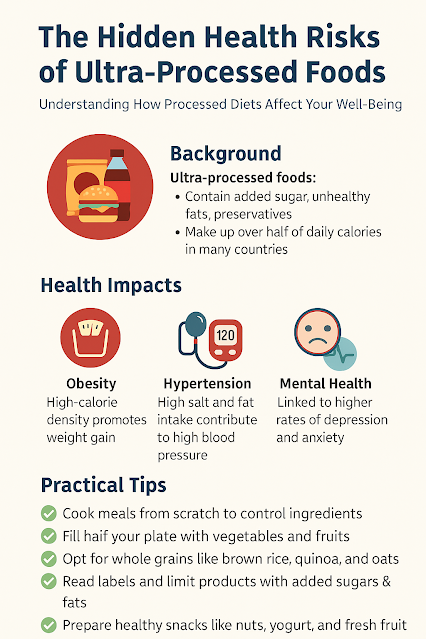
Ultra-processed foods (UPFs) have become a staple in modern diets, from packaged snacks and sugary drinks to instant noodles and ready-to-eat meals. While convenient and affordable, research increasingly shows that these foods come with significant health risks. Understanding how UPFs affect your body is essential for making healthier choices.
The Science: What Are Ultra-Processed Foods?
UPFs are industrial formulations made mostly from refined substances and additives such as flavorings, preservatives, and emulsifiers. They often contain:
-
High amounts of sugar, salt, and unhealthy fats
-
Artificial flavors and colors
-
Low levels of fiber, protein, and micronutrients
Health Risks of Ultra-Processed Foods
Obesity and Weight Gain
UPFs are calorie-dense and engineered to encourage overeating. Studies link high UPF consumption to obesity and metabolic syndrome.
Hypertension and Heart Disease
Excess salt, sugar, and trans fats contribute to high blood pressure and cardiovascular risk. Regular intake is associated with increased rates of stroke and heart attack.
Diabetes and Insulin Resistance
High-glycemic load and refined sugars in UPFs cause blood sugar spikes, leading to insulin resistance and type 2 diabetes.
Cancer Risk
Some studies suggest associations between UPF consumption and cancers, especially colorectal cancer, due to additives and low protective nutrients.
Mental Health Effects
Emerging research indicates links between UPFs and higher rates of depression and anxiety, possibly due to inflammation and poor nutrient profiles.
Practical Tips: Reducing Ultra-Processed Foods
✅ Read labels carefully — Watch for hidden sugars, sodium, and additives.
✅ Cook more at home — Preparing meals from whole foods reduces reliance on packaged options.
✅ Choose minimally processed alternatives — Frozen fruits, plain yogurt, whole grains.
✅ Limit sugary drinks — Replace soda with water, tea, or unsweetened beverages.
✅ Plan ahead — Keep healthy snacks (nuts, fruits) available to resist UPFs.

Why It Matters – A Global Perspective
According to the World Health Organization, UPFs are rapidly increasing in low- and middle-income countries, following Western dietary patterns. This trend is fueling global epidemics of obesity, hypertension, and diabetes. Reducing UPF consumption is not just a personal choice — it’s a public health priority.
Conclusion
Ultra-processed foods may be convenient, but their health risks are undeniable. By cutting back on UPFs and choosing whole, minimally processed foods, you can significantly lower your risk of chronic diseases and improve overall well-being.
👉 Key takeaway: “The more natural your food, the healthier your body.”
References
- World Health Organization – Healthy Diet Fact Sheet
- Harvard T.H. Chan School of Public Health – Ultra-Processed Foods and Health
- National Institutes of Health – Impact of Ultra-Processed Foods on Health