Introduction
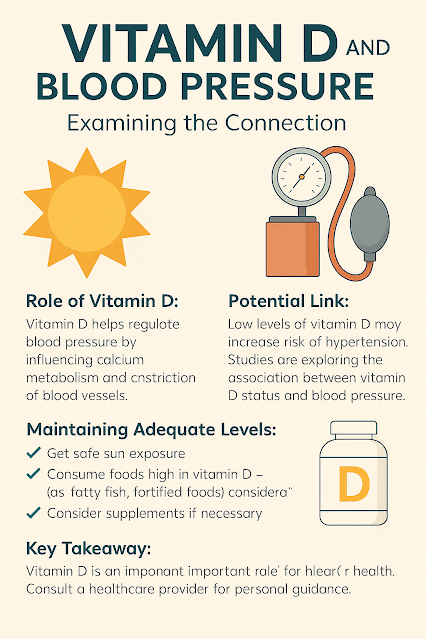
Vitamin D, often called the “sunshine vitamin,” does more than strengthen bones — it plays a vital role in cardiovascular health. Recent studies suggest that vitamin D deficiency may increase the risk of high blood pressure (hypertension) and related heart conditions.
The Science: How Vitamin D Affects Blood Pressure
Vitamin D helps regulate the renin–angiotensin–aldosterone system (RAAS), a hormone network that controls blood pressure.
When vitamin D levels are low:
-
RAAS activity increases, leading to vasoconstriction and higher blood pressure.
-
Inflammation and endothelial dysfunction worsen, further stressing the heart.
Conversely, sufficient vitamin D may promote vasodilation (widening of blood vessels), improve insulin sensitivity, and reduce arterial stiffness.
Research Insights
-
A 2023 meta-analysis in The Journal of Hypertension found that vitamin D supplementation led to modest but consistent reductions in systolic blood pressure among deficient individuals.
-
Observational studies from the American Heart Association indicate that people with low vitamin D levels have a 30–40% higher risk of developing hypertension.
-
However, benefits appear strongest when deficiency is corrected — not from excessive supplementation.
Lifestyle Factors and Vitamin D Sources
There are three main ways to maintain healthy vitamin D levels:
-
Sunlight exposure – 10–20 minutes of sunlight on arms and legs several times a week.
-
Dietary sources – Fatty fish (salmon, mackerel, sardines), egg yolks, and fortified dairy or plant milks.
-
Supplements – Especially useful during winter or in regions with limited sunlight.
Practical Tips for Heart and Blood Pressure Health
✅Maintain moderate sun exposure — use sunscreen after about 20 minutes outdoors.
✅Get your vitamin D levels tested annually.
✅Include oily fish and fortified foods in your weekly diet.
✅Consult a healthcare provider before taking supplements.
✅Combine vitamin D with exercise and a balanced diet for optimal cardiovascular benefits.
Public Health Perspective
Vitamin D deficiency is a global issue, particularly in regions with limited sunlight.
Public health initiatives encouraging safe sun exposure and fortified foods can help reduce hypertension prevalence and improve heart health outcomes.

Conclusion
While vitamin D is not a magic bullet, maintaining adequate levels supports overall cardiovascular function and blood pressure control.
As the “sunshine vitamin,” it reminds us that natural balance — sunlight, nutrition, and movement — is key to a healthy heart.
👉 Key takeaway:
“Keep your vitamin D in check — small rays of sunlight can make a big difference for your heart.”
References
- National Institutes of Health – Vitamin D Fact Sheet for Health Professionals
- American Heart Association – Vitamin D and Your Heart
- World Health Organization – Vitamin D and Health