Introduction
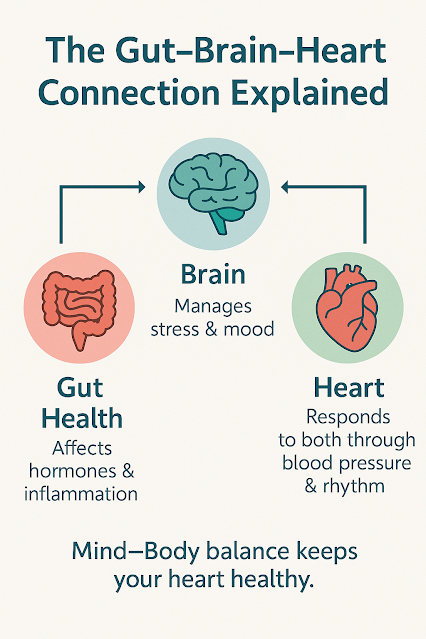
The human body is an intricate network of connections — and one of the most fascinating is the gut-brain-heart axis. This three-way communication link means that your emotional state, digestive health, and cardiovascular system constantly interact.
When mental health suffers, stress hormones rise, gut bacteria shift, and blood pressure increases — setting the stage for heart disease.
The Science Behind the Gut-Brain-Heart Axis
Recent research has revealed that the gut microbiome — trillions of microorganisms living in your intestines — communicates with your brain via the vagus nerve and chemical messengers like serotonin.
Chronic stress or anxiety disrupts this balance, increasing inflammation and oxidative stress, which in turn affect blood vessel function and blood pressure regulation.

How Mental Health Affects Cardiovascular Function
Depression, anxiety, and chronic stress can elevate levels of cortisol and adrenaline, hormones that narrow blood vessels and raise heart rate.
Over time, these changes lead to high blood pressure, arterial stiffness, and even plaque buildup in the arteries — a major risk factor for heart attacks and strokes.
The Role of Gut Health in Regulating Mood and Blood Pressure
A healthy gut microbiome produces beneficial compounds such as short-chain fatty acids (SCFAs) that reduce inflammation and support blood vessel flexibility.
An imbalanced gut, often caused by poor diet or antibiotic overuse, can contribute to both mood disorders and hypertension — showing how deeply connected these systems are.
Practical Tips for a Healthy Gut-Brain-Heart Connection
✅ 1. Eat More Fiber-Rich Foods
Whole grains, legumes, fruits, and vegetables feed beneficial gut bacteria and help regulate blood pressure.
✅ 2. Manage Stress Daily
Incorporate breathing exercises, yoga, or mindfulness to reduce cortisol levels.
✅ 3. Include Probiotics and Fermented Foods
Yogurt, kefir, kimchi, and sauerkraut help restore healthy gut flora balance.
✅ 4. Sleep Well and Stay Consistent
Sleep deprivation disrupts both microbiome diversity and cardiovascular rhythms.
✅ 5. Stay Socially Connected
Strong relationships and emotional support reduce stress and improve long-term heart outcomes.
Conclusion
Your mental and physical health are not separate. By nurturing your gut and mind, you protect your heart. Small daily habits — from stress control to mindful eating — can have a profound impact on blood pressure and longevity.
👉 Key takeaway: A healthy gut and a calm mind keep your heart in rhythm.
References
- Harvard Health Publishing – The Gut-Brain Connection
- National Institutes of Health (NIH) – The Microbiome and Mental Health
- American Heart Association – How Your Gut Microbiome Affects Your Heart Health