Introduction
Intermittent fasting (IF) — the practice of cycling between periods of eating and fasting — has gained immense popularity for weight management and metabolic health. But recent research reveals it may also play a significant role in controlling blood pressure and improving cardiovascular function.
The Science Behind Fasting and Blood Pressure
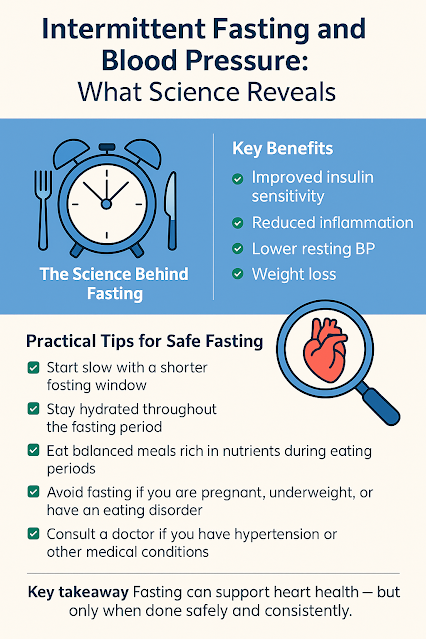
During fasting, insulin levels drop, improving blood vessel flexibility and reducing inflammation.
Lower insulin resistance helps the body better regulate sodium and fluid balance — two key factors in maintaining healthy blood pressure.
Studies also show fasting enhances nitric oxide production, improving vascular dilation and blood flow.

Benefits of Intermittent Fasting for Blood Pressure
1. Reduces Insulin Resistance
Improved insulin sensitivity helps stabilize blood sugar and prevent vascular stiffness.
2. Lowers Inflammation
Fasting decreases inflammatory markers like CRP and IL-6, reducing arterial stress.
3. Promotes Weight Loss
Shedding excess fat lessens cardiac strain and helps normalize blood pressure.
4. Improves Lipid Profile
Regular fasting supports HDL (“good” cholesterol) and reduces triglycerides.
5. Regulates Hormonal Balance
It supports the renin-angiotensin system, which plays a key role in blood pressure regulation.
Practical Tips for Safe Fasting
✅ Start Gradually — Begin with a 12:12 or 14:10 fasting window before progressing to 16:8.
✅ Stay Hydrated — Drink water or herbal teas during fasting periods.
✅ Avoid Excessive Caffeine or Sodium — These can raise blood pressure during fasting.
✅ Break Fast Wisely — Choose potassium-rich foods like bananas or avocados.
✅ Consult a Professional — Especially if you have diabetes, hypertension, or are on medication.
Conclusion
Intermittent fasting is not just a diet trend — it’s a metabolic strategy with measurable cardiovascular benefits.
By improving insulin sensitivity, reducing inflammation, and optimizing vascular function, fasting can meaningfully lower blood pressure when done safely and consistently.
👉 Key takeaway:
“Fasting done right can help the heart rest easier — but it’s not one-size-fits-all.”
References
- National Institutes of Health (NIH) – Intermittent fasting and cardiovascular health
- American Heart Association (AHA) – How intermittent fasting may help your heart
- Johns Hopkins Medicine – What is intermittent fasting and how does it work?