Introduction
Sleep apnea is more than just loud snoring — it is a serious condition where breathing repeatedly stops during sleep. Each pause deprives the body of oxygen, triggering stress responses that raise blood pressure. Over time, untreated sleep apnea becomes a hidden driver of hypertension, increasing risks for stroke, heart attack, and kidney disease.
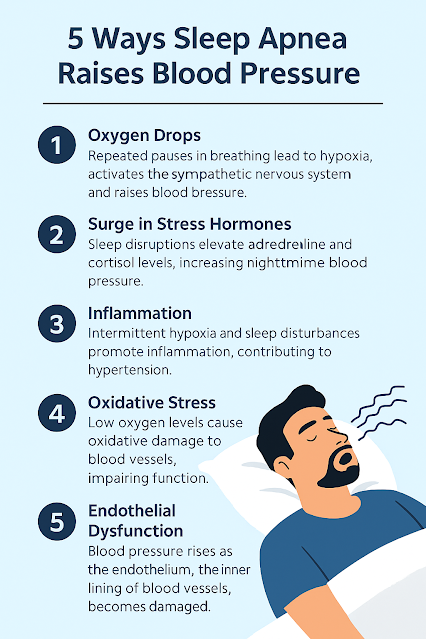
The Science: How Sleep Apnea Raises Blood Pressure
-
Oxygen Drops (Hypoxia): Intermittent low oxygen levels activate the sympathetic nervous system, causing blood vessels to constrict and blood pressure to rise.
-
Hormonal Disruption: Stress hormones such as adrenaline and cortisol remain elevated throughout the night.
-
Endothelial Damage: Repeated oxygen fluctuations damage blood vessels, reducing their ability to relax.
Research Evidence
-
The American Heart Association reports that up to 50% of people with sleep apnea also have hypertension.
-
A study in Hypertension journal found that patients with untreated sleep apnea had a twofold risk of resistant hypertension (blood pressure that does not improve with medication).
-
Clinical trials show that CPAP therapy (Continuous Positive Airway Pressure) significantly lowers both systolic and diastolic blood pressure.
Lifestyle Contexts
-
Undiagnosed Cases: Many people with sleep apnea are unaware, as symptoms occur during sleep.
-
Obesity Connection: Excess weight is one of the strongest risk factors, with fat deposits narrowing the airway.
-
Daytime Fatigue: Beyond blood pressure, sleep apnea causes poor concentration, mood swings, and reduced productivity.
Practical Tips for Protecting Blood Pressure
✅ 1. Watch for Symptoms
Loud snoring, daytime fatigue, and waking up gasping may signal sleep apnea.
✅ 2. Seek Medical Evaluation
A sleep study can confirm the diagnosis and guide treatment.
✅ 3. Consider CPAP Therapy
Using a CPAP machine at night helps keep airways open and reduces blood pressure.
✅ 4. Maintain Healthy Weight
Even modest weight loss can improve airway function and lower blood pressure.
✅ 5. Avoid Alcohol and Sedatives Before Bed
These relax airway muscles and worsen apnea symptoms.

Public Health Implications
Sleep apnea remains underdiagnosed worldwide, yet it carries profound cardiovascular consequences. Increasing awareness, expanding access to sleep studies, and integrating sleep health into hypertension guidelines are essential to reducing the global burden of heart disease.
Conclusion
Sleep apnea is not simply a sleep disorder — it is a silent risk factor for high blood pressure. Recognizing the symptoms, pursuing proper treatment, and adopting lifestyle changes can protect both nightly rest and long-term heart health.
👉 Key takeaway:
“Treating sleep apnea means treating high blood pressure — don’t ignore the signs of poor sleep.”
Related Articles
References
- American Heart Association –
Sleep Apnea and Heart Disease/Stroke
- Hypertension (AHA Journal) –
Obstructive Sleep Apnea and Hypertension
- NHLBI/NIH –
Sleep Apnea Overview