Introduction
Traveling or living at high altitudes exposes the body to thinner air with less oxygen. While many people adapt, those with hypertension or heart conditions face unique risks. Understanding how altitude impacts blood pressure is essential for prevention and safe living.
The Science: How Altitude Affects Blood Pressure
-
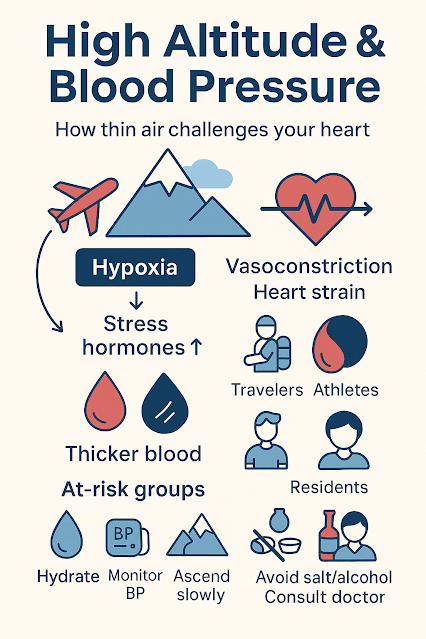
Hypoxia (low oxygen): Reduced oxygen causes the body to release stress hormones, temporarily raising blood pressure.
-
Vasoconstriction: Blood vessels narrow to optimize oxygen delivery, adding strain on the heart.
-
Increased red blood cells: Over time, the body produces more red blood cells to carry oxygen, thickening blood and increasing cardiovascular risk.
Research Evidence
-
A study in Circulation showed that people with hypertension had greater blood pressure increases at high altitude compared to healthy individuals.
-
Research in European Heart Journal confirmed that hypoxia activates the sympathetic nervous system, driving up blood pressure.
-
WHO notes that residents above 2,500 meters face higher cardiovascular burden, particularly when combined with lifestyle risk factors.
Lifestyle Contexts: Who Is Most Affected?
-
Travelers: Tourists visiting mountains or highland regions often experience temporary spikes in blood pressure.
-
Athletes: Endurance athletes use altitude training, but excessive exposure may raise cardiovascular risks.
-
Residents: Long-term high-altitude dwellers adapt physiologically but may still face chronic hypertension.
Practical Tips: Staying Heart-Healthy at Altitude
✅ 1. Monitor blood pressure more frequently during altitude exposure.
✅ 2. Stay well-hydrated to avoid blood thickening.
✅ 3. Limit alcohol and high-salt foods that compound stress on the heart.
✅ 4. Ascend gradually, allowing time for acclimatization.
✅ 5. Consult a doctor before traveling if you have hypertension or heart disease.

Why It Matters
As global travel increases and more people live or work at high altitudes, understanding cardiovascular risks becomes urgent. Proactive monitoring and simple lifestyle adjustments can help reduce complications.
👉 Key takeaway:
“Thin air means higher strain — protect your heart when you climb higher.”
Related Articles
References
- CDC – Travelers’ Health: Travel to High Altitudes
- CDC Yellow Book – High-Altitude Travel & Altitude Illness
- AHA News – High-altitude travel risks for heart conditions
- AHA (consumer) – Travel and Heart Disease (includes altitude)
- NIH/PMC Review – Impact of High Altitude on Cardiovascular Health