Introduction
Menopause marks a significant transition in women’s health, driven by hormonal changes that influence cardiovascular function. After menopause, the risk of developing high blood pressure rises sharply, making this life stage a critical window for prevention and awareness.
The Science: Why Menopause Raises Blood Pressure
-
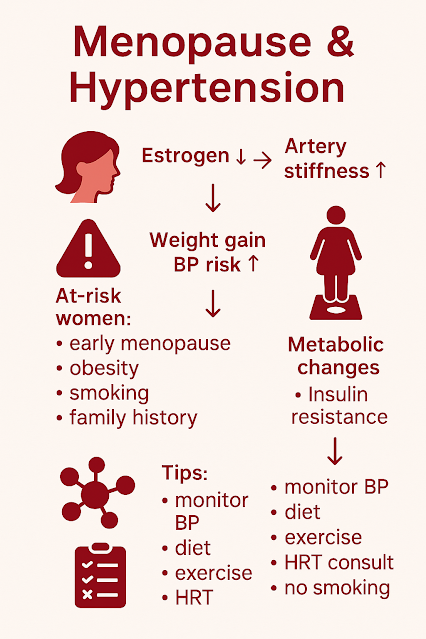
Estrogen decline: Estrogen has protective effects on blood vessels. After menopause, reduced estrogen causes stiffening of arteries and loss of vascular flexibility.
-
Weight gain and fat distribution: Hormonal shifts promote abdominal fat accumulation, a known risk factor for hypertension.
-
Metabolic changes: Insulin resistance often increases post-menopause, further fueling blood pressure elevation.
Research Evidence
-
A Journal of Hypertension study showed that women over 50 experience a steeper rise in blood pressure compared to men of the same age.
-
The American Heart Association highlights that postmenopausal women are more likely to develop cardiovascular disease within 10 years of menopause onset.
-
The North American Menopause Society emphasizes hormone changes as a primary driver of women’s cardiovascular risk.
Lifestyle Contexts: Women Most at Risk
-
Early menopause: Women who experience menopause before age 45 have higher lifetime cardiovascular risk.
-
Obesity and smoking: These amplify the effects of estrogen loss.
-
Family history: Genetic predisposition adds to postmenopausal vulnerability.
Practical Tips: Protecting Heart Health During and After Menopause
✅ 1. Monitor blood pressure regularly, especially after age 45.
✅ 2. Maintain a balanced diet low in salt, rich in fruits, vegetables, and whole grains.
✅ 3. Stay physically active with aerobic and strength exercises.
✅ 4. Discuss hormone replacement therapy (HRT) options with a doctor.
✅ 5. Avoid smoking and limit alcohol consumption.
✅ 6. Get regular cardiovascular screenings post-menopause.

Why It Matters
Hypertension after menopause is not inevitable but requires vigilance. With lifestyle adjustments and preventive care, women can greatly reduce their cardiovascular risk.
👉 Key takeaway:
“Menopause changes hormones, but it doesn’t have to change your heart health.”
Related Articles
References
- American Heart Association –
High Blood Pressure and Women
- American Heart Association News –
Menopause and cardiovascular disease risks
- The Menopause Society –
Heart Health after Menopause
- Circulation (AHA Scientific Statement) –
Menopause Transition and Cardiovascular Disease Risk
- NIH/PMC (Review) –
Menopause and women’s cardiovascular health