Introduction
High blood pressure (hypertension) is often described as a “silent killer.” While physical factors like diet, exercise, and genetics are well known, mental health plays a critical — and often underestimated — role in blood pressure regulation. Stress, anxiety, and depression can all trigger changes in the body that elevate blood pressure and worsen long-term cardiovascular risks.
The Science: How Mental Health Affects Blood Pressure
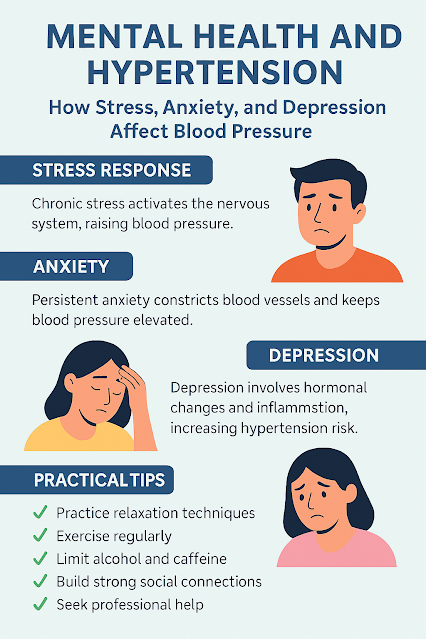
Stress Response
When the body is under stress, it activates the sympathetic nervous system. This releases adrenaline and cortisol, which raise heart rate and constrict blood vessels, temporarily increasing blood pressure.
Chronic Anxiety
Persistent anxiety keeps the body in a heightened state of alert, leading to prolonged blood vessel constriction and elevated blood pressure over time.
Depression
Depression is associated with hormonal imbalances and inflammation, both of which can worsen cardiovascular health and increase the likelihood of hypertension.
Research Evidence
-
A study in Hypertension (American Heart Association journal) found that chronic stress significantly increased the risk of developing hypertension over 10 years.
-
The World Health Organization (WHO) notes that mental health conditions are major contributors to global disease burden and directly affect cardiovascular outcomes.
-
Research from the Journal of the American College of Cardiology highlights depression as an independent risk factor for poor blood pressure control.
Lifestyle Contexts
Workplace Stress
Shift work, high-demand jobs, and lack of recovery time amplify stress-related blood pressure spikes.
Sleep Disruption
Insomnia and poor sleep quality often linked with anxiety and depression worsen hypertension risk.
Medication Interactions
Some antidepressants and anti-anxiety drugs may affect blood pressure and require careful monitoring.

Practical Tips to Manage Both Mind and Heart
-
✅ Practice relaxation techniques: meditation, yoga, or deep breathing.
-
✅ Maintain regular physical activity, which improves both mood and cardiovascular health.
-
✅ Limit alcohol and caffeine, which can worsen anxiety and raise blood pressure.
-
✅ Build strong social connections to reduce stress and loneliness.
-
✅ Seek professional help for persistent anxiety or depression — therapy and appropriate medication can protect heart health.
Why It Matters
Mental health is inseparable from physical health. By recognizing the impact of stress, anxiety, and depression on blood pressure, individuals and healthcare providers can adopt a holistic approach. Protecting the mind ultimately protects the heart.
👉 Key takeaway:
“Managing your mental health is just as important as managing your diet or exercise when it comes to blood pressure.”
References
- American Heart Association – Hypertension Journal
- World Health Organization – Mental health overview
- Journal of the American College of Cardiology – JACC official site