Introduction
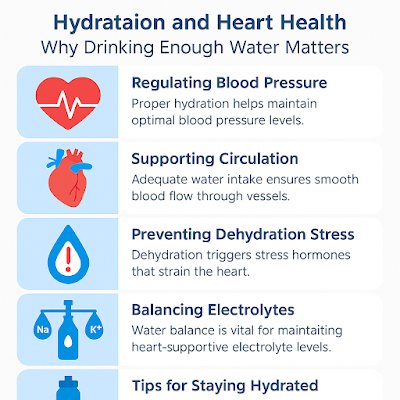
Water is the most fundamental element for life — and for your heart. Adequate hydration keeps your blood volume stable, allowing your heart to pump efficiently and maintain a healthy blood pressure. Yet, millions of people worldwide live in a state of mild dehydration without realizing its impact on cardiovascular health.
Even a small drop in body water can increase heart rate, constrict blood vessels, and raise blood pressure. Understanding how hydration supports heart and vascular function is key to long-term cardiovascular protection.
The Science Behind Hydration and Blood Pressure
Blood is about 90% water. When hydration decreases, blood becomes thicker and harder to circulate.
This increases the heart’s workload and can temporarily raise blood pressure levels.
Moreover, dehydration activates the vasopressin and renin-angiotensin system, both of which constrict blood vessels.
Long-term inadequate water intake has been associated with higher risk of heart failure and kidney dysfunction, as highlighted in recent studies from the European Heart Journal.
Signs of Poor Hydration
-
Persistent fatigue or dizziness
-
Dark or reduced urine output
-
Increased heart rate at rest
-
Dry mouth or headaches
-
Cramps or lightheadedness during mild activity
These are early physiological cues that the cardiovascular system is under strain due to low fluid levels.

Practical Tips for Staying Hydrated
✅Drink 2–2.5 liters of water daily, adjusting for climate and activity level.
✅Start your morning with water, before caffeine or breakfast.
✅Balance electrolytes if you sweat heavily or exercise often.
✅Limit sugary or caffeinated drinks that may promote fluid loss.
✅Eat water-rich foods — cucumbers, watermelon, lettuce, and oranges are excellent sources.
Why It Matters
Proper hydration helps regulate blood viscosity, vascular tone, and heart rhythm stability.
For hypertensive or diabetic patients, consistent hydration prevents unnecessary stress on the kidneys and heart.
In contrast, chronic dehydration may worsen atherosclerosis progression and metabolic strain over time.
Conclusion
Hydration isn’t just a lifestyle choice — it’s a cardiovascular habit.
Ensuring sufficient fluid intake supports optimal heart function, circulation, and pressure regulation.
As simple as it sounds, “drinking water is one of the easiest ways to protect your heart.”
References
- National Institutes of Health (NIH) – Hydration and Health: A Review
- European Heart Journal – Hydration status and risk of heart failure
- Centers for Disease Control and Prevention (CDC) – Water and Healthier Drinks