Introduction
Digital Health Tools and Hypertension: Can Apps and Wearables Improve Blood Pressure Control?
Hypertension management is entering a new era with the rise of digital health. Mobile apps and wearable devices promise to make blood pressure monitoring more accessible, personalized, and engaging. But how effective are they really, and what role can they play in global heart health?
The Science: How Digital Tools Support Hypertension Care
-
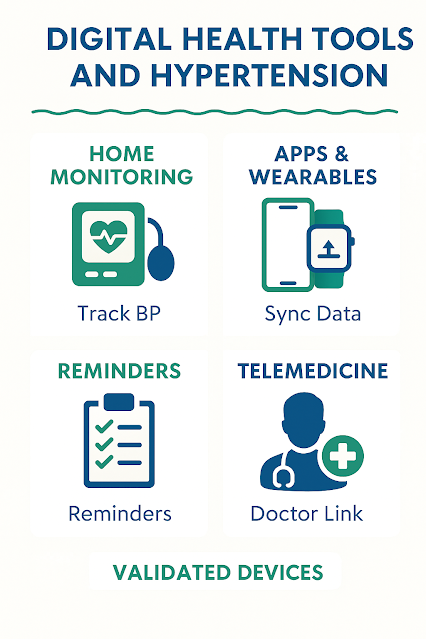
Real-time monitoring: Wearables like smartwatches continuously track heart rate and blood pressure, offering early alerts.
-
Data integration: Apps can collect lifestyle data (sleep, diet, stress) and provide insights into blood pressure trends.
-
Remote healthcare: Digital tools enable physicians to monitor patients without clinic visits, improving access in underserved areas.
Research Evidence
-
A meta-analysis in Journal of the American Heart Association showed that app-based self-monitoring improved blood pressure control compared to usual care.
-
Studies on wearables indicate better medication adherence and patient engagement when daily reminders are provided.
-
The World Health Organization highlights digital health as a cost-effective intervention in chronic disease management.
Lifestyle Contexts: How Patients Use Digital Health
-
Motivation: Gamified progress trackers keep users motivated.
-
Convenience: Apps allow blood pressure logging anytime, anywhere.
-
Equity challenge: Access gaps remain—older adults and low-income populations may face barriers.
Practical Tips: Using Digital Tools Effectively
✅ 1. Choose validated devices (look for FDA/CE approval).
✅ 2. Sync your data with healthcare providers for accuracy.
✅ 3. Set reminders for medication and lifestyle habits.
✅ 4. Use apps to track salt intake, weight, and sleep quality.
✅ 5. Avoid over-reliance—combine technology with regular checkups.

Why It Matters – Public Health Perspective
Digital health tools offer scalable solutions to the global hypertension crisis. By empowering individuals with real-time data and integrating healthcare providers into the loop, apps and wearables can reduce complications, hospital visits, and costs. The challenge lies in ensuring equity, privacy, and clinical validation.
Conclusion
Technology alone cannot solve hypertension, but it can dramatically enhance how we prevent and manage it. From apps that track daily habits to wearables that provide 24/7 data, digital health tools are reshaping the future of cardiovascular care.
👉 Key takeaway:
“Use technology wisely: apps and wearables can support, but not replace, healthy habits and medical care.”
Related Articles
References
- World Health Organization – Global strategy on digital health 2020–2025
- Journal of the American Heart Association – Mobile health interventions for blood pressure control
- National Institutes of Health – Effectiveness of digital tools in hypertension management